- Discovery
- Ranking
- Indie makers
Getting discovered with a leaderboard listing: what a paid position buys
What a paid leaderboard listing gets a browser extension or mobile app on AppRanker, what it does not, and how to decide if a position is worth it.
AppRanker team5 min read
On this page
If you build a browser extension or a small mobile app, you already know the discovery problem. The stores are enormous, search favours products that already have installs, and a new listing starts with none. Most promotion channels either cost more than a small project can justify or ask you to trust a process you cannot see.
A pay-to-rank leaderboard is a much simpler proposition: you pay, you get a position, and the position is public. This post explains what that position is on AppRanker, what it is not, and how to think about whether it is worth buying.
What you are actually buying
On AppRanker, a payment adds to a listing's total, and the board is a descending sort on that total. A new listing starts at $5 at the time of writing, and a listing already on the board can be raised from $1. There is no account, no submission form to have approved and no queue. When the payment clears, usually within seconds, the listing is live.
Concretely, that payment gets you four things:
- A standing place on the board. Your row shows the app's name, icon and store details and links straight out to your store page.
- A listing page of your own, at
/app/<storeId>, with your rank, your lifetime total, the store description and your screenshots. - A share card, a 1200 by 630 image built from your store art, so links to your listing preview properly when posted.
- A position that does not decay. Your total never expires and nothing is time-weighted, so the money keeps working until someone pays more than you.
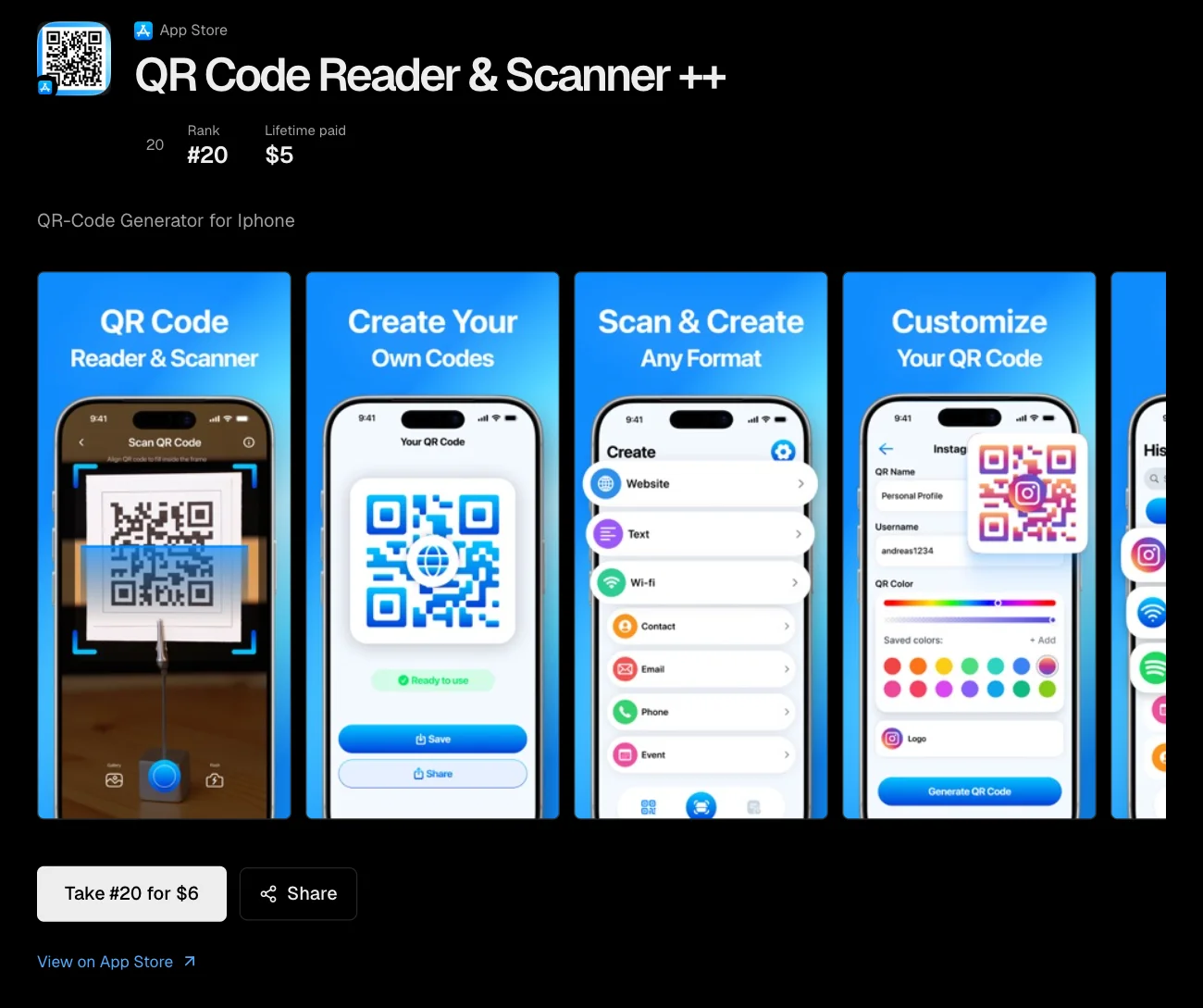
A listing page at /app/<storeId>: rank, lifetime total, description and screenshots, all read from the App Store.
It supports the five stores most small software products ship to:
| Store | What gets listed |
|---|---|
| Chrome Web Store | Browser extensions |
| Microsoft Edge Add-ons | Browser extensions |
| Firefox Browser Add-ons | Browser add-ons |
| Google Play | Android apps |
| Apple App Store | iOS apps |
You paste a store link or the raw store ID. Tracking parameters are stripped from what you paste, and the name, icon and description come from the store itself, so you do not write anything and there is nothing to keep in sync by hand.
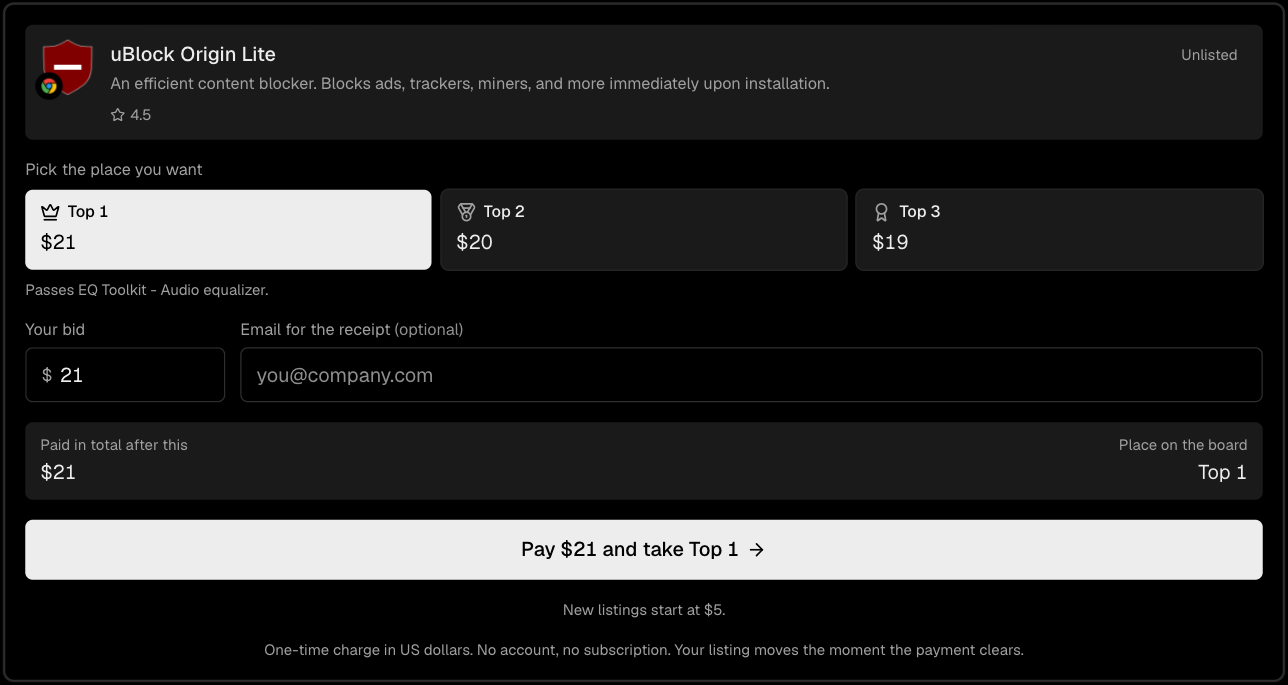
Pasting a store link for an app that is not on the board yet. Name, icon, rating and description come from the store, and every place is priced before you pay.
What you are not buying
A position is a place to be seen. It is not a promise about what happens next, and the terms and refund policy are explicit about that.
- No guaranteed traffic. Clicks, installs and revenue are never promised, and not getting them is not grounds for a refund.
- No published click counts. Clicks go through AppRanker's own redirect so the counts stay honest, but they are not shown beside your listing.
- No endorsement. Rank is a mechanical sort on money. It is not a review, a quality badge or a statement that the app is good.
- No protection from being passed. Someone paying more can take your rank at any time. That is the point of the board, not a defect.
A bid buys position, not results.
That line from the refund policy is worth keeping in mind. If you are expecting a leaderboard to do the job of a product people want, no amount of position will help. If you have a product people want and the problem is that nobody has seen it, a visible position is a direct way to address exactly that problem.
Why transparency matters for small makers
For a solo developer or a small team, the most useful property of a pay-to-rank board is not the rank itself. It is that the rule is fully visible. You can look at the board right now and see exactly what first, second and third place cost, because the price of passing a listing is its total plus $1.
That makes the decision a normal budgeting question instead of a gamble:
- What does the position I want cost today?
- How long do I expect to hold it before someone passes me?
- If I am passed, is the gap worth paying again?
That last question has a friendlier answer than it first appears. Because your total is kept forever, getting a rank back only costs the difference plus the $1 step, not the full amount again.
Ties favour whoever got there first
When two listings have the same total, the one that reached it first stays ahead. You cannot be displaced by someone who merely matches you; they have to pay more. That removes any incentive to wait for a rival to move first.
Everyone sees the same price
There are no private deals and no negotiated placements on the board. Every buyer is quoted the same price for the same position in the bid console before they pay, and the board itself is the public record of what everyone has paid.
Getting the most out of a position
A listing works best when the pages around it are ready for visitors.
- Fix your store page first. The board and your listing page both read from it, so its icon, description and screenshots are what people see.
- Share your listing page. It has its own share card, and every share channel on it uses one canonical URL.
- Pick a position deliberately. The podium at the top of the board is the most prominent place on the page; the board is paginated below it, and positions further down cost less.
- Revisit it after launch. Look at the board again once launch week is over and decide whether holding your rank still matters to you.
- Combine it with other listings. Our guide on where to submit your app compares launch sites and directories you can use alongside a position.
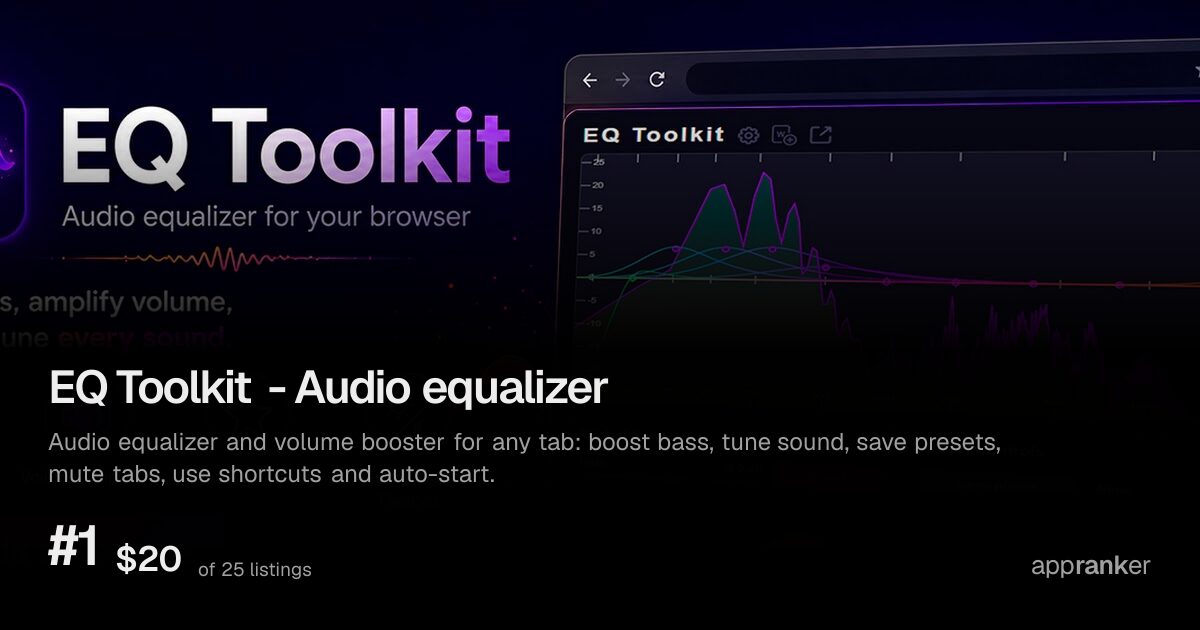
The share card a link to EQ Toolkit's listing unfurls into, built from its own store art.
Is it worth it?
It depends on what you would otherwise spend and what a new user is worth to you. The honest framing is that a leaderboard position is cheap, instant and visible, and makes no promises beyond that. For many small extensions and apps, a few dollars for a permanent, linkable spot in front of people browsing for new software is an easy experiment to run.
To see exactly what your app's position would cost right now, paste its store link on the home page. The price for every rank is shown before you pay.